Wide Horizon Z Studio
Why should digital feel less like glass?
We believe the screen is a barrier, not a canvas. Wide Horizon Z rejects the sterile flatness of modern interfaces. Instead, we sculpt "playable art"—experiences where every interaction carries weight, friction, and a ghost of the creator's intent.
We don't just write code; we build environments that breathe. This is our manifesto on the physics of digital emotion.
We Design for Touch Weight.
Visual Weight & Haptics
We audit every pixel for gravity. Buttons aren't just flat circles; they are surfaces that compress, bounce, and settle. We simulate the resistance of a physical object in a digital space, creating a subconscious expectation of resistance.
Sound as Scaffolding
Audio isn't feedback; it's structure. We use foley recorded from real materials—wood, servos, ceramic—to ground interactions. When a user drags a slider, they should hear the texture of the friction, not a generic beep.
The Tearing Point
We design for the moment of "tearing"—when the user realizes the interface is obeying physics they didn't expect. It’s the digital equivalent of lifting a heavy door that glides with zero friction. It shocks the system.
"Invisible UI is good UI."
The industry obsession with "clean" and "minimal" has resulted in a sea of undifferentiated, weightless interfaces. It treats the screen like a window pane—something to look through and ignore.
The Consequence
Apps feel ephemeral. Users swipe without thinking. Engagement drops. There is no soul in the machine.
"UI should be a dense surface."
Wide Horizon Z builds "thick" interfaces. We want users to feel the layers. We want the glass to have thickness, texture, and temperature. When an app fights back, you remember it.
- Minimal hover reliance (Mobile-first)
- Inconsistent physics (Deliberate friction)
- High visual density (Information architecture)
Method Note: Evaluation
Our development cycle evaluates "resistance" as a core metric. We stress-test interactions against a "boredom threshold"—if the sensation of an action vanishes after 10 repetitions, the mechanic fails. We accept higher code complexity for sustained engagement.
The Trade-offs
- Performance vs. Fidelity High-fidelity physics simulations can tax mobile GPUs. Mitigation: We render haptics and audio server-side where possible, leaving only the visual layer to the client.
- Accessibility vs. "Thick" UI Dense interfaces can overwhelm screen readers. Mitigation: We build a parallel "flat" DOM layer that is visually hidden but fully accessible to assistive tech.
- Discovery vs. Intuition Novel interactions require learning. Mitigation: We use "onboarding as reward," teaching mechanics through gamified first-run tutorials that grant immediate satisfaction.
The Studio Lineage
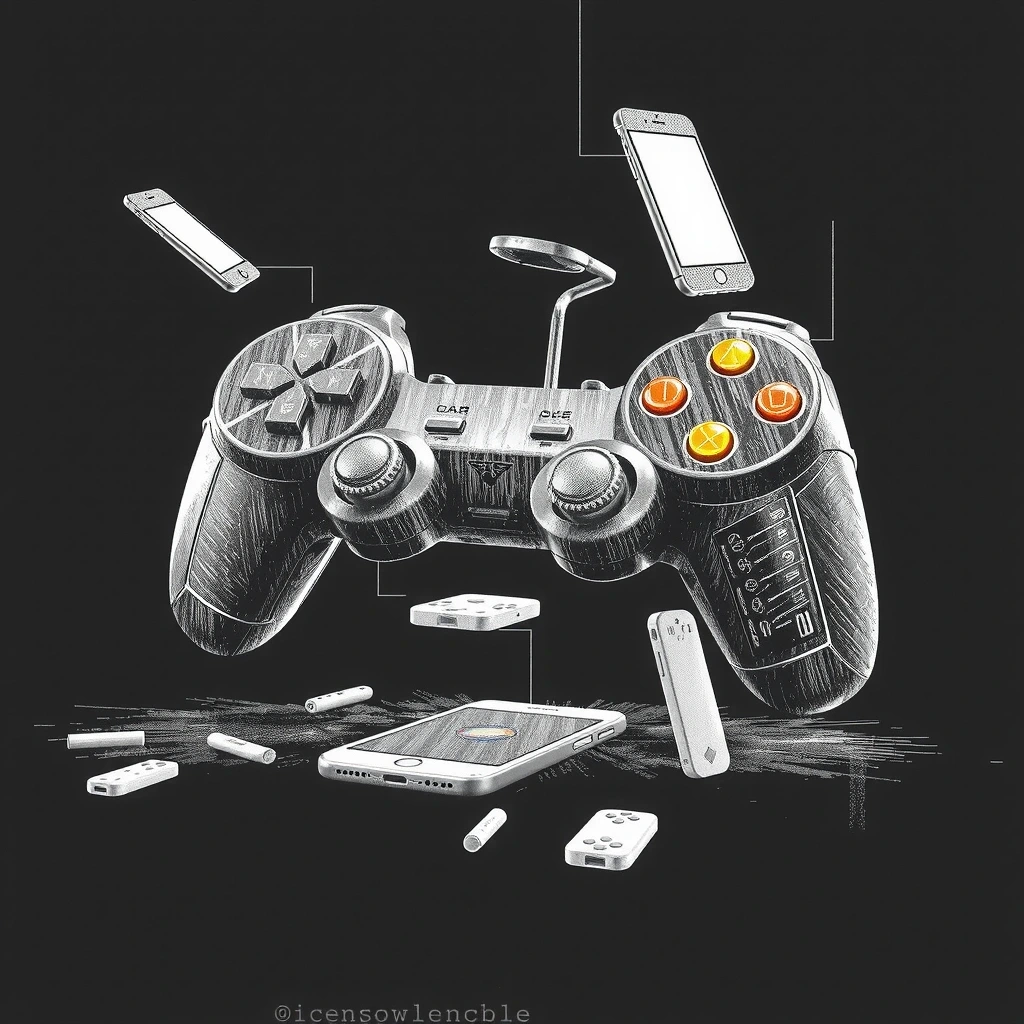
Origins
Every project starts on paper. We map the "weight" of a button before we write a line of C++.
We are building the future of play.
Join us.
Wide Horizon Z is currently selecting partners for the next generation of tactile experiences. Whether you are a publisher, an engine architect, or a press member looking for a story that isn't just "metaverse" buzzwords, let's talk.
Via Roma 15, 00184 Roma, Italy